Rio Grande Valley: Trump's 2024 Hispanic Gains Are Fading Fast
Shifting tides in Texas border communities threaten Republican midterm prospects despite record support shown just two years ago.
By Ayanda Novak ·
For many residents in the Rio Grande Valley, the political landscape that helped Donald Trump secure a historic victory among Hispanic voters in 2024 is already changing. With the US midterm elections approaching on 3 November, the mood in these border communities has shifted noticeably. Democrats are working hard to reclaim territory, yet they face a challenging path in a region that once delivered an unusually strong showing for the Republican president.
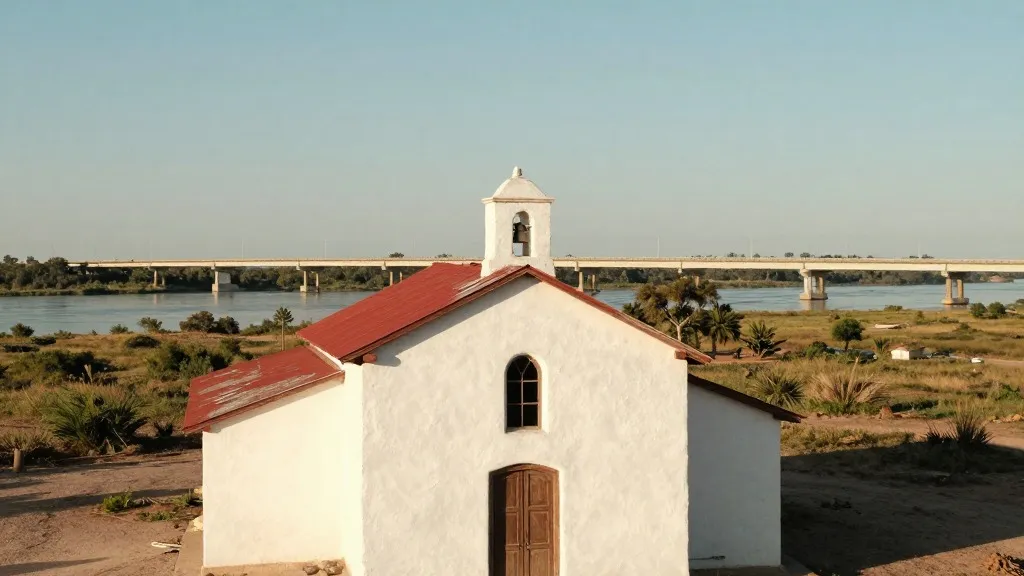
The change is visible in local institutions. At the La Lomita Catholic Chapel, located near the Rio Grande and dating back to the Civil War era, Father Roy Snipes has addressed his congregation about recent enforcement actions. Known locally as the Cowboy Priest, he has led the parish for nearly fifty years. He previously fought efforts to seize the chapel's land for a border wall during Trump's first term. Speaking to a small group of worshippers, mostly Hispanic, he questioned the rationale for removing neighbors who are viewed as good and poor people.
Data underscores the local impact of federal policy. According to figures obtained by the Deportation Data Project, Texas accounted for roughly one-third of all Immigration and Customs Enforcement arrests nationwide in July 2026. This share is larger than any other state's. The region was once a busy crossing point, with over two million and a half apprehensions recorded in a single year under former President Joe Biden. Trump campaigned on ending illegal crossings, and current levels are at their lowest in decades, a promise that helped him capture about 55% of Hispanic votes in Texas, a record for a Republican candidate.
However, recent surveys suggest this support is eroding. Polls taken since late summer show a majority of Hispanic voters in Texas disapproving of the president. They favor Democratic candidates over Republicans by a significant margin. Javier Villalobos, the Republican mayor of McAllen, expects a difficult race but credits the administration with securing the border. He notes that while most accept removing criminals, the removal of productive and law-abiding citizens is where the friction begins.
Local business leaders reflect this sentiment. Mario Guerrero, a Mexican-American businessman and head of the South Texas Builders Association, voted for Trump three times but intends to support a Democrat in November. He argues that voters were not informed about the scale of the administration's actions. He describes an acquaintance whose crew of 35 daily workers has shrunk to just four or six, illustrating the difference between securing a border and the method of the crackdown. Republican consultant Mike Madrid points out that Latinos are more likely than other groups to identify as independents.
Republicans had assumed the 2024 shift was permanent, which drove early redistricting efforts. Texas redrew its 15th district in 2025 to create an 18-point Republican majority. Yet current polling shows a Democratic lead of five or six points. Democratic candidate Bobby Pulido, a Tejano singer and two-time Latin Grammy winner, has avoided the national party brand to focus on the economy. He argues that the local context is distinct from major coastal cities.
Economic concerns dominate voter conversations. At a local avocado festival, residents Dave Baldwin and Veronica Salazar blamed the president for rising prices. Baldwin stated that the leader is in control of their destiny but is not performing well. Republican campaigners admit they are on the defensive. Student volunteer Alexis Uscanga described the midterms as a game of turnout, while candidate Tano Tijerina in the neighboring 28th district acknowledged that national political headwinds are real, even as he credited Trump with breaking through barriers.
If the polls hold, a modest swing back toward Democrats could reshape races beyond Texas. Within the state, such a shift could put a US Senate seat in play, a position Democrats have not won for more than 30 years.
Source: BBC News
More Politics · World news · Report a business · Got a Story?