Opium Markets: Borderlands Replace Afghanistan as Primary Production Zone
Satellite data reveals over 9,000 hectares of new poppy fields in Pakistan and Iran, driven by Afghan growers and local economic distress.
By Samir Lin ·
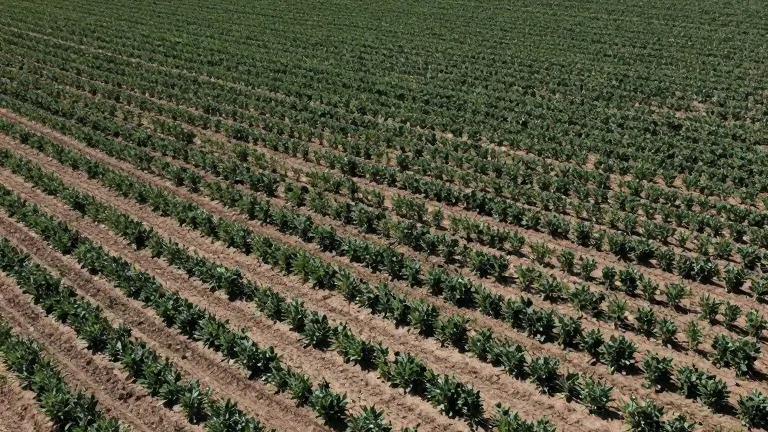
More than 9,000 hectares of poppy cultivation have been identified in Pakistan's Balochistan province, marking a sharp shift in global opium supply away from Afghanistan. This expansion follows the Taliban's 2022 ban on illicit narcotics, which reduced Afghan output but pushed production across the border into neighboring regions.
David Mansfield, a UK-based expert on the industry, stated that the combination of the ban and instability in the tri-border area has turned these remote zones into a global center for production. His August report for the British satellite firm Alcis identified the vast majority of these fields in the districts of Loralai and Killa Abdullah. The analysis suggests that cultivation is not merely spillover but a deliberate industrial shift, with growers investing in infrastructure such as solar-powered wells.
Afghan farmers from Kandahar and Helmand are driving this expansion by leasing land in Pakistan and Iran. They bring capital and expertise, often sharing profits with local landowners. In Killa Abdullah, former National Assembly member Abdul Qahar Wadan alleged that senior military officials and power brokers support the crops to collect commissions. Local administrator Monawar Hussain disputed this, claiming a decline after last year's eradication campaign, yet 2026 satellite imagery shows no clear evidence of such destruction.
Economic pressure is fueling the boom in both countries. In Iran's Sistan-Baluchistan province, a similar pattern of tenancy and sharecropping has emerged. Iranian authorities, distracted by the conflict with the United States and Israel since late February, have left the 2026 crop largely untouched. The use of drip irrigation in these fields indicates that growers planted in late 2025 with low expectations of government intervention. This infrastructure signals a move from mixed farming to large-scale poppy monoculture.
Inside Afghanistan, production is rebounding despite the ban. Badakhshan province now accounts for roughly half of the national output, while cultivation in the southwest almost doubled between 2025 and 2026. Farmers there hide poppies within wheat fields and behind compound walls to evade detection. Mansfield noted that a recent directive barring home searches without a court order may encourage further expansion if farmers interpret it as official tolerance.
The United Nations Office on Drugs and Crime acknowledges spillover effects but describes Pakistan's total production as marginal. Islamabad maintains that any discovered crops are destroyed, though it has not responded to recent requests for comment. As the economy in the region remains strained, experts predict that cultivation levels will rise further in 2027, potentially increasing heroin supplies for international markets.
Source: RFE/RL
More Business · World news · Rip-Off Report · Report a business · Got a Story?