Blue Planet III retains murky ocean visuals to certify footage is real
Producers kept grainy shots and underwater debris to distinguish the new series from AI-generated content, while a 100-year-old Attenborough reviews the final edits.
By Ayanda Novak ·
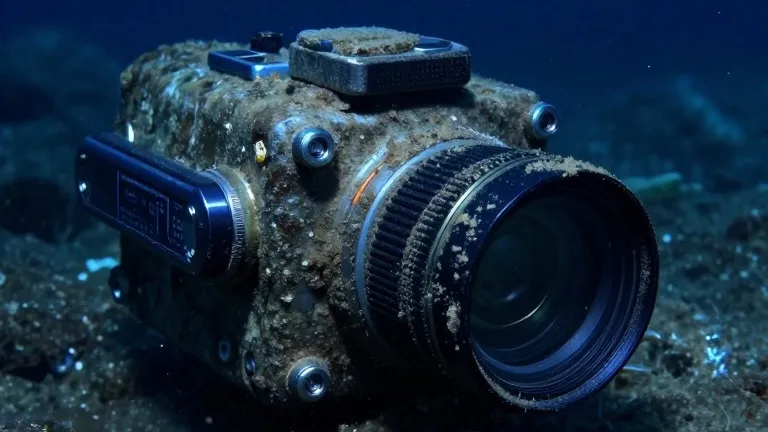
The producers of Blue Planet III have deliberately preserved lower quality, cloudier footage to distinguish the new documentary from computer-generated imagery. The BBC Studios natural history unit stated that this visual imperfection serves as a marker of authenticity in an era where artificial intelligence can easily fabricate realistic video. The strategy aims to prevent audiences from dismissing the rare deep-sea captures as synthetic.
The series marks a major expansion of the franchise's production standards. It arrives nearly a decade after the second installment and 25 years after the original broadcast. The production team utilized advanced equipment, including the world's first underwater CCTV camera, which crew members nicknamed the stonefish. This technology allows for continuous monitoring of marine life without the intrusion of large camera rigs.
Elizabeth White, the executive producer, explained that the rise of generative AI has forced the team to lean into organic aesthetics. She noted that deep-ocean creatures are often more complex than algorithms can predict. White stated that the team now retains details such as plankton, boat hulls, and buoys in the frame, elements that previous editors would have cropped out or rejected due to poor water clarity. This approach counters the polished look of modern high-definition screens.
Jack Bootle, the BBC’s head of specialist factual commissioning, addressed the industry shift during a press screening. He assured journalists that no generative AI was used in the production, confirming that every frame is real photography. Bootle described the current period as a golden age for natural history, noting that while viewers may feel they have seen it all, the new series contains novel behaviors that have not been documented before.
The footage captures specific animal interactions, including dolphins using sea sponges to seal coral holes and trap fish. These scenes were recorded using the underwater CCTV system developed by Yoland Bosiger, the programme’s producer and director. Other sequences show a grouper communicating with a different fish species, 200,000 crabs forming feeding lines, and sea urchins using shells for shade. A penguin segment draws a parallel to a famous moment from Planet Earth II.
The production required four years of filming across five oceans. Lara Bickerton, the series producer, detailed the engineering solutions used to capture these scenes. The team built a mini-dome camera to track an octopus and developed a deep-sea selfie stick. Camera operators wore leg-mounted scooters to film immersive diving sequences, while lasers were deployed to illuminate deep-sea animals. These tools allow for close-range observation without disturbing the subjects.
The series also examines environmental pressures, including the impact of warmer seas on clownfish habitats. One episode shows anemones dying due to climate change and the fish attempting to repair their homes. The plastics theme from the second series continues with a focus on pollutants and forever chemicals. David Attenborough, who is 100 years old, was heavily involved in the process, making changes to the scripts and reviewing new footage.
White addressed the BBC’s recent £500m cost-cutting drive, noting that the unit saved money by hiring more local crews on location. The series is set to premiere on BBC1 and iPlayer on Sunday, 1 November.
Source: The Guardian
More Business · World news · Rip-Off Report · Report a business · Got a Story?