Lebanese photojournalist survives drone strike that killed veteran reporter
Zeinab Faraj was trapped under rubble for hours after a missile hit her car, while colleague Amal Khalil died nearby.
By Ayanda Novak ·
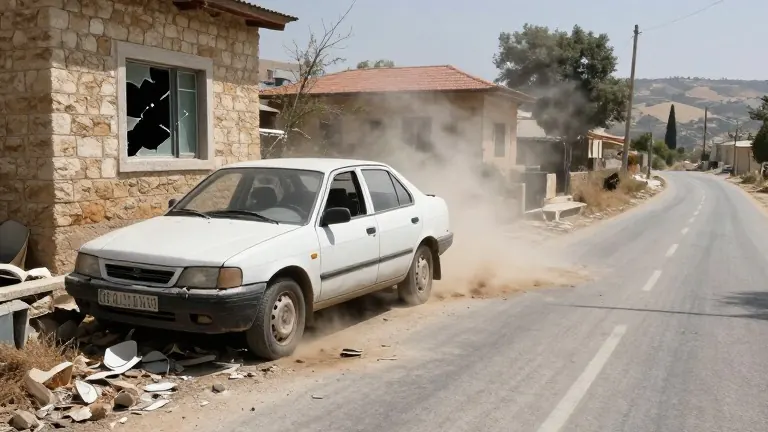
Zeinab Faraj, 21, survived a missile strike in southern Lebanon that killed her colleague, veteran newspaper reporter Amal Khalil, 42. The attack occurred on April 22, just days after Israel and Lebanon agreed to a ceasefire that was meant to pause months of deadly airstrikes. The two women were documenting the war damage in the village of al-Tiri when the first missile struck a car ahead of them.
The group included municipal official Ali Nabil Bazzi, 27, and Mohammed Hourani, 37, who had met the journalists at a hospital in Tebnine earlier that day. Bazzi was scheduled to sign a marriage contract that evening. Faraj heard Khalil scream and saw the car catch fire. She ran toward it to check on Bazzi but realized their bodies were badly injured.
As Faraj and Khalil tried to call emergency services, drones flew low over their heads. Paramedics told them to drive back up the road because ambulances could not reach the site. As they attempted to get into their own vehicle, a second missile hit it. Both women were thrown backward, and Khalil wrapped her arms around Faraj. They took shelter in a nearby house while drones continued to circle overhead.
Inside the building, Faraj watched the road for rescuers. She sent a message to her sister saying, "There is no hope left. Forgive me," before her phone battery died. A paramedic eventually reached them after a delay. He held Faraj by the shoulders while a second worker cleared the rubble that was pressing down on her body. Faraj said she felt alone and terrified as drones returned.
Khalil died approximately one hour before paramedics were finally allowed to return to the area to rescue Faraj. The Israeli military stated they identified saboteurs violating the ceasefire. Human rights groups described the incident as a war crime. A week prior to the strike, an Israeli military spokesperson had shared a video of Khalil and labeled it "terrorist media."
Faraj is now returning to university to finish her degree in radio and television. She has visible injuries to her face and hand, and a limp that makes climbing stairs difficult. She wakes at night screaming and buries herself in pillows to block out the sound of drones. The image of Hourani looking at her after the first strike continues to haunt her.
The ceasefire had allowed residents to return to their homes in southern Lebanon, where many villages had been demolished. Faraj, who grew up in the nearby city of Bint Jbeil, described the area as essential to her identity. The strike occurred while she was filming the aftermath of the conflict, a routine task that had previously felt safe to her.
Source: The Guardian