Georgia's Economy Grew 7.5% in 2025 as Protesters Marched for a Second Year
Tourist visits reached 5.5 million in 2025 while street demonstrations continued in Tbilisi over the government's suspension of EU accession talks.
By Samir Lin ·
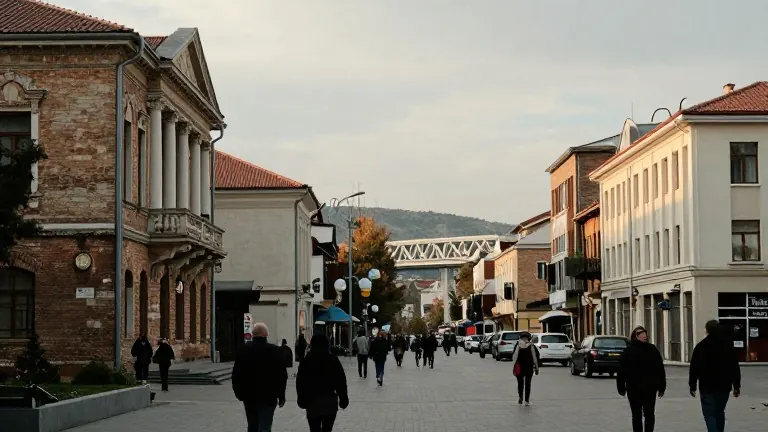
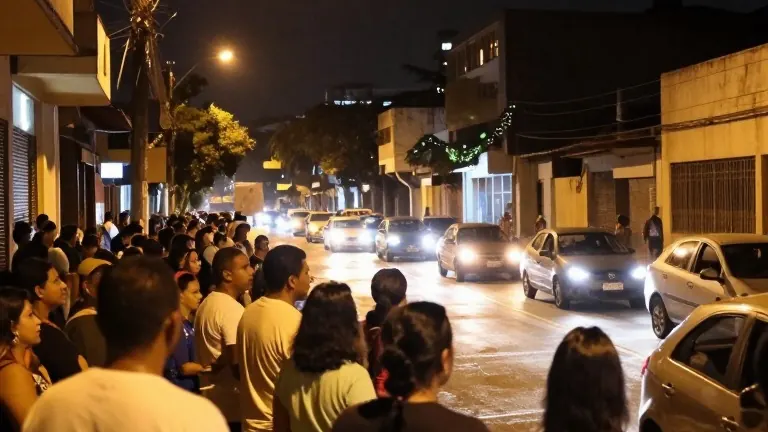
Protesters gathered again on Saturday at Avlabari Square in Tbilisi's Armenian quarter, marching toward the Bridge of Love, then Freedom Square, then parliament, calling for the resignation of Prime Minister Irakli Kobakhidze's government. Monday marks two years since the contested parliamentary election of 26 October 2024. That vote set off a political crisis, and demonstrations began two days later.
The Georgian National Tourism Administration recorded more than 5.5 million international tourist visits in 2025, up 8.4% from 2024. The figure is nearly 10 times the roughly 560,000 visitors the country received 20 years ago. Georgia's GDP rose 7.5% in 2025, the fifth straight year of expansion. Unemployment, low wages, poverty and rural depopulation remain in the economy, which relies on trade, tourism, remittances, Russian capital and energy imports.
The Georgian Dream party has held power since 2012. Critics accuse it of growing authoritarianism and of moving the country closer to Moscow by suspending EU accession talks. Georgia received EU candidate status in 2023. On 28 November 2024, the government said it would not put the opening of EU negotiations on its agenda before the end of 2028. The EU has since criticized Georgia's record on rule of law and political repression.
The country has a population under 4 million and sits between Russia and Turkey, with Armenia and Azerbaijan as neighbors. After the 2008 conflict with Moscow and the consolidation of Russian military control over Abkhazia and South Ossetia, which account for about 20% of Georgian territory, diplomatic relations between the two countries were severed. Russian citizens who relocated to Georgia after the 2022 invasion of Ukraine have bought homes across the country, adding pressure to the property market.
Bidzina Ivanishvili, who founded Georgian Dream in 2012 and made his fortune in Russia in the 1990s after the Soviet collapse, renovated the Rustaveli theatre in Tbilisi 20 years ago. He served as prime minister from 2012 to 2013 and is now in his 70s. The country emerged from the Soviet Union in 1991 and is roughly the size of Ireland.
Source: The Guardian