Iraqi Prime Minister Visits Jordan to Deepen Trade, Energy and Security Ties
Ali al-Zaidi met King Abdullah II and Prime Minister Jafar Hassan in Amman on October 26, signing nine cooperation documents while talks touched on a duty-free zone and a Basra-Aqaba pipeline.
By Riya Conti ·
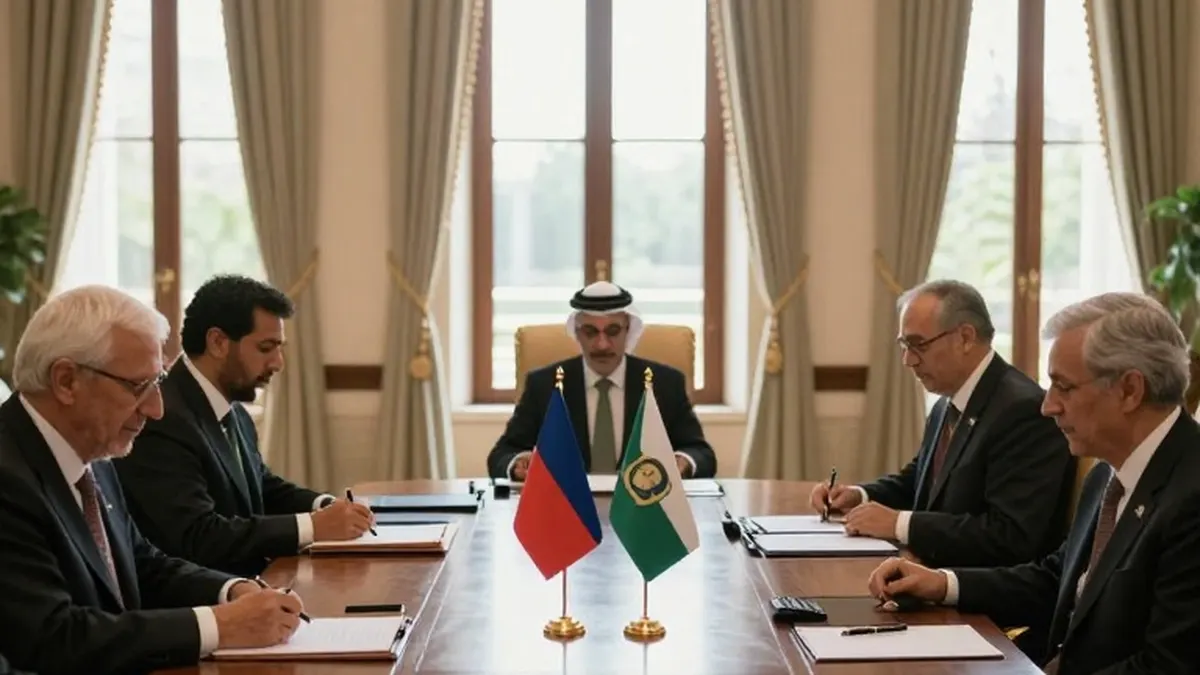
Iraqi Prime Minister Ali al-Zaidi traveled to Jordan on October 26 for talks with King Abdullah II and Jordanian Prime Minister Jafar Hassan. The trip, his first official visit to the kingdom since taking office, signaled Baghdad's push to strengthen ties with its western neighbor at a time of regional tension. It followed a visit to Saudi Arabia on October 14.
According to the Iraqi News Agency, Zaidi also met Palestinian President Mahmoud Abbas as well as Iraqi businesspeople and investors before returning to Baghdad. The two governments held expanded bilateral talks and signed nine cooperation documents. They cover higher education, environmental protection, consumer protection, diplomatic cooperation, cultural exchanges and support for small and medium-sized enterprises.
The Iraqi Prime Minister's Office said discussions centered on economic, commercial, industrial and security cooperation. "Jordan is a strategic partner for Iraq, and we look forward to more cooperation and joint coordination to deal with all challenges and advance the consolidation of bilateral relations," Zaidi said, according to his office.
Economic issues were at the heart of the visit. Zaidi, a banker before becoming prime minister, stressed the value of a duty-free economic zone between the two countries, saying it would boost trade and economic cooperation, according to Rudaw. However, none of the nine announced documents established such a zone. Hassan said Jordan wants to move joint projects to "actual ground implementation, following practical steps and clear timelines," as reported by Petra and quoted by Rudaw.
Energy was another major theme. Jordan once imported between 10,000 and 15,000 barrels of Iraqi crude per day under a bilateral deal, but Rudaw reported that deliveries have been suspended since late December 2025 after the agreement expired and suitable crude proved hard to obtain. Jordan's Energy Ministry said it imported about 2.76 million barrels of Iraqi oil during 2025. A proposed Basra-Aqaba pipeline would link Iraq's southern oilfields to Jordan's Red Sea port and could give Baghdad an export route that reduces its reliance on shipping through the Strait of Hormuz.
The relationship has deep roots. Both countries were ruled by branches of the Hashemite dynasty in the twentieth century until Iraq's monarchy fell in 1958. During the Iran-Iraq War, the port of Aqaba and the highway between Amman and Baghdad served as key trade links for Iraq. The 2003 US-led invasion changed the relationship, sending many Iraqi refugees to Jordan, and the rise of ISIS in 2014 posed new threats to both states.
Security remains a shared concern. The two countries share a border of almost 180 kilometers, and Iraq's Anbar province, which also borders Syria and Saudi Arabia, is strategically important for transport, trade and regional security. The visit came days after an October 23 attack on a church in Jordan's Karak that killed nine people and wounded 40. Jordanian security forces have arrested three suspects.
Iraq and Jordan also take part in a trilateral mechanism with Egypt covering energy, electricity, infrastructure and trade. Egyptian officials cited by Rudaw said Zaidi is expected to visit Cairo on November 23. He is also expected to travel to Damascus, a trip that Kurdistan24 reported had earlier been planned before the Jordan visit but was postponed.
The next stage will depend on whether the agreements signed in Amman produce practical results. A free trade zone, electricity interconnection projects and the Basra-Aqaba pipeline are among the initiatives that could deepen ties, as Baghdad seeks to widen its partnerships with Arab neighbors while managing its relationship with Iran.
Source: The Jerusalem Post