Tokyo Jury Chair Questions Value of New A-List Status
Rolf de Heer leads a five-member panel tasked with judging 15 films, asserting that the festival's reputation already matched its official tier.
By Samir Lin ·
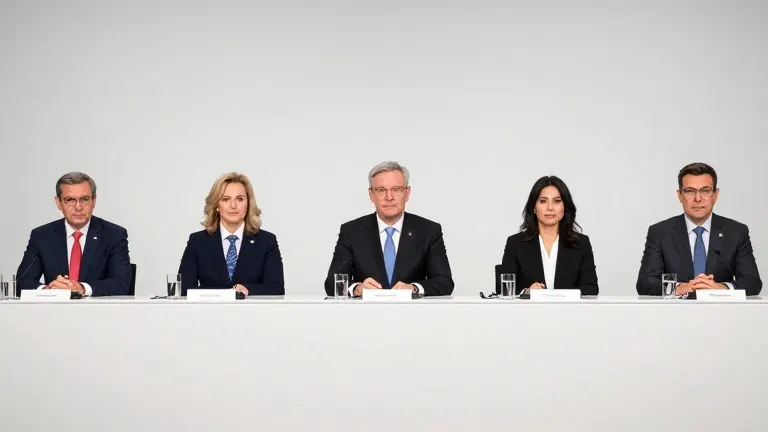
Dutch-Australian director Rolf de Heer told a Tuesday press conference that the Tokyo International Film Festival effectively held A-list status long before the International Federation of Film Producers Associations granted it official recognition. The 2026 competition jury, which includes De Heer, French colorist Yov Moor, South Korean producer Oh Jungwan, Japanese actress Makiko Watanabe, and Taiwanese-American producer Alex C. Lo, convened to discuss their upcoming evaluation of 15 competing films.
De Heer argued that the formal categorization changes little for the industry's core attendees. "Tokyo was effectively an 'A' festival," he stated. "And so in that sense, I don't think it makes a lot of difference." He noted that while the label may help attract higher-quality submissions, it does not fundamentally alter the event's standing among those who already participate in major international film markets.
The panel addressed the tier system with mixed perspectives. Oh Jungwan, who described herself as not a regular film festival attendee, suggested that audiences attend to watch films and enjoy the atmosphere rather than to validate organizational rankings. "Probably A-list means good!" she said, eliciting laughter from the room. She emphasized that her personal motivation for attending is the cinematic experience itself, not the administrative classification.
When asked if the tier system has become redundant, De Heer offered a concise assessment. "It matters a great deal to some people, and not at all to others," he said. "And that is as it should be." Alex C. Lo highlighted the festival's operational strengths, identifying top-tier hospitality and an intellectually curious audience as the primary drivers of Tokyo's reputation for supporting original storytelling.
The jury also prepared for potential internal conflicts regarding the Tokyo Grand Prix. De Heer explained that the panel will navigate disagreements based on the specific nature of the split among members. He expressed confidence that the group could select a compelling winner without settling for a lesser compromise film, despite the risk of individual preference clashes.
Oh Jungwan recalled a previous experience where she argued for a specific film for seven hours against the will of the rest of the panel. She joked that she was ready to fight De Heer this year but hoped the process would be shorter. "We are grownups and there are so many good films, so we will find a good way to compromise," she said.
Moor, a colorist who noted the rarity of his profession serving on such juries, described the invitation as a personal dream. He plans to use the platform to bring greater visibility to the role of colorists in filmmaking. De Heer concluded by describing the festival as a punctuation point in his career, noting he is currently between projects and using the event to make decisions about his next steps.
Source: The Hollywood Reporter