US Universities Admit 15% Fewer Doctoral Students Amid Funding Cuts
International rankings have slipped and international enrollment has dropped as American institutions face a multi-year decline in global standing.
By Riya Conti ·
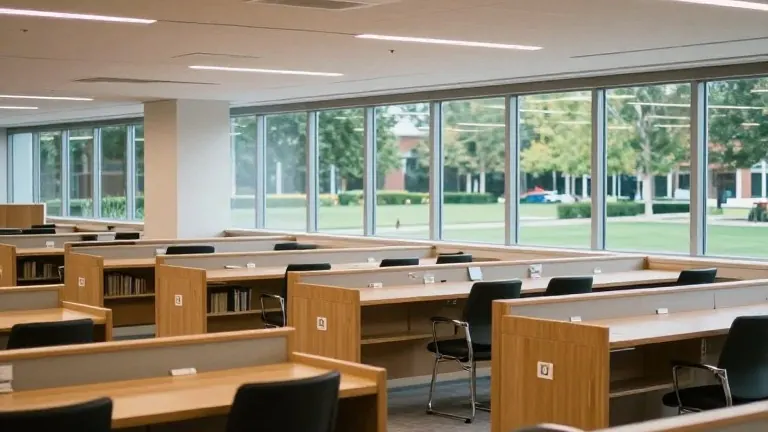
American research universities admitted 15 percent fewer doctoral students for the upcoming academic year, according to the Association of American Universities. Many institutions did not accept new doctoral candidates at all. The association states that the United States faces the risk of losing an entire generation of scientific talent.
This contraction follows a period of federal funding cuts and restrictions on international students. Eric Mlyn, a faculty fellow at the Kenan Institute for Ethics at Duke University, notes that these problems are beginning to trickle down through the system. He argues that multiple issues are now threatening America’s global standing in higher education.
Global rankings reflect this shift. The number of U.S. universities in the top 100 of the QS World University Rankings has dropped from 31 to 26 over the last decade. Phil Baty, the Times Higher Education’s chief global affairs officer, describes the trend as a slow diminution that makes the country less attractive to talent. He warns that this could trigger a serious downward spiral in academic influence.
Chinese institutions are gaining ground in specific metrics. China produces nearly 50 percent more doctoral graduates in science, technology, engineering, and math fields than the United States, according to the National Science Foundation. Chinese universities now hold seven of the top 10 places in the Leiden Rankings for academic productivity. In those rankings, Harvard has fallen from first place to third.
Research output in artificial intelligence also favors Chinese scholars. Between 2018 and 2023, researchers in China produced 28 percent of all English language articles on the topic. U.S. scholars accounted for 16 percent. However, the National Science Foundation notes that American work still receives more citations from other researchers, a key indicator of relative quality.
The financial implications of these shifts are substantial. The flow of international students to the United States slowed by as much as 22 percent last summer. NAFSA and JB International project a drop of 111,000 international students this fall. They estimate this decline will cost the U.S. economy $3.4 billion.
Policy changes have accelerated the exodus of researchers. At least 85 scholars moved to China since the start of 2024, including Nobel Prize winner Omar Yaghi, who is leaving the University of California, Berkeley, for Tsinghua University. A survey by Nature found that three in four U.S.-based researchers have considered leaving the country. American scientists submitted 32 percent more job applications abroad in the first quarter of last year compared to the previous year.
The Trump administration’s 2027 budget request proposes reducing spending on the National Science Foundation by 55 percent and the National Institutes of Health by 13 percent. Steven Durlauf, an economist at the University of Chicago, calls the current trajectory suicidal. He points to the postwar period, when federal support helped establish U.S. academic preeminence, as proof that the current model works well.
Source: Daily Breeze