Passengers Describe Chaos After Two High-Speed Trains Collide South of Madrid
Survivors of the crash between a Renfe train and an Iryo train near Mora and Orgaz recounted violent impacts, smoke and rescue efforts, and some voiced anger over how the collision could happen.
By Ayanda Novak ·
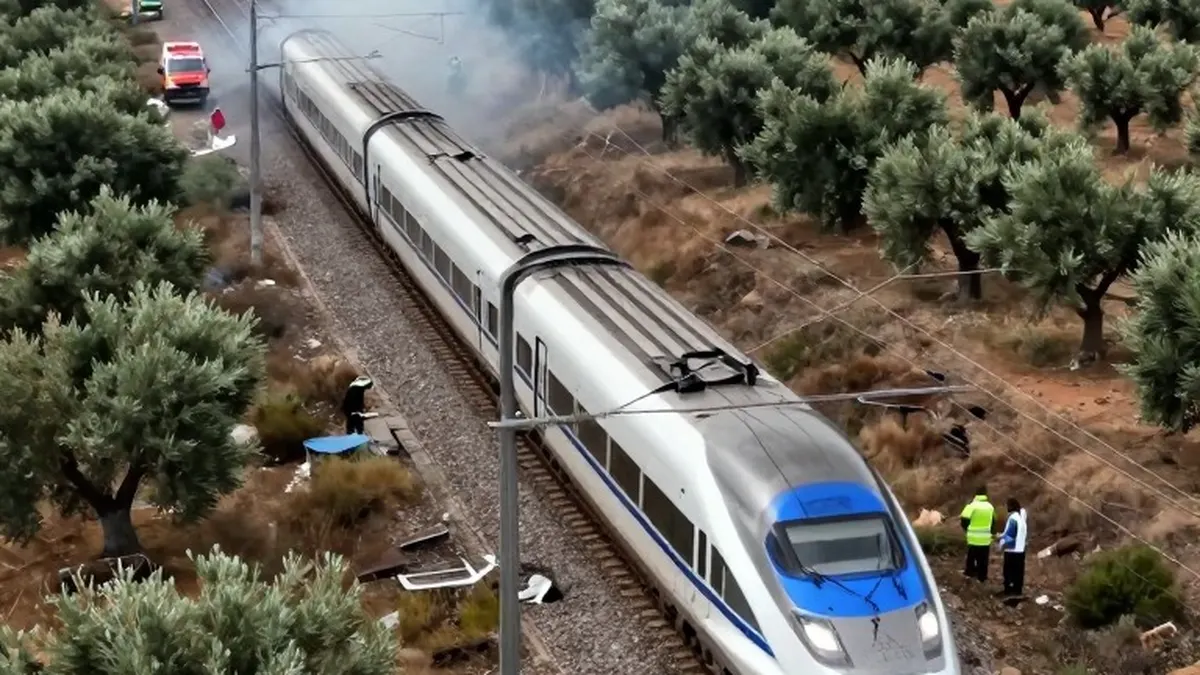
Passengers who survived a collision between two high-speed trains south of Madrid have described scenes of shock, injury and confusion, with some questioning how the crash was allowed to happen. The accident took place on Wednesday, 2026-10-28, on the line running from the Spanish capital to Seville.
Shortly before 08:30 local time, two trains were heading south. A Renfe train, run by the state-owned operator, carried 397 passengers. Ahead of it on the same line was an Iryo train, operated by a private company, with 147 passengers. A reported computer failure in the automatic signalling system had forced all trains on the affected stretch to stop.
According to Spain's transport minister, Óscar Puente, the Renfe train was then ordered to proceed in "error". He described what followed as something that should have been impossible. The Renfe train struck the back of the Iryo train between the municipalities of Mora and Orgaz, about 140km (87 miles) south of Madrid.
Tangui Binier, 22, was in the front carriage of the Iryo train, with his father in the next one. He told the BBC the train began to speed up a few minutes after stopping, then halted abruptly. Looking out, he saw wires coming down on one side and a lot of smoke behind. After stepping outside, he saw the other train behind theirs and his own train "completely flipped over" with its rear covered in debris. He spoke of dead bodies and missing limbs, and said he did not know whether he would ever recover. Passengers without injuries, including his father, who carried a girl with a broken hip to safety, helped others until local people, police and Guardia Civil ambulance crews arrived.
On the Renfe train, journalist Roberto Gómez had been dozing when the train, after a brief stop, began moving again and then crashed. He told Onda Cero radio the impact was terrible and the carriage was completely destroyed, with suitcases scattered everywhere. He suffered only minor injuries but saw another passenger left with a deep head gash, and helped people who had taken severe blows to the chest and ribs.
Rafael Barcelo, who was having a coffee when the train hit, told Reuters that everyone was thrown into the air. He was in coach seven, which he said was the most destroyed and had the most victims, and counted at least eight victims there. Salvador Arriza said even carriages far from the impact were wrecked, with seats torn loose and people facing the direction of travel thrown through the air. Some people were trapped between seats, he said, and he noticed a piece of track that had pierced the roof of one coach, which he thought may have helped reduce the train's momentum.
Sebastián Herrero, on the train that was hit from behind, said the impact threw him onto the seats in front. He described many people with broken noses and arms, and smoke everywhere.
Spain was already reeling from the Adamuz high-speed rail disaster near Córdoba in January, in which 46 people died. That crash happened on the same line, much further south, so Wednesday's collision has raised many questions for the authorities.
Several affected passengers were visibly angry. One said it was not possible that one train was stopped for five or 10 minutes while the other was not told to stop. "How can this happen with the technology we have?" they asked, adding that the driver of the other train was the person who should have been warned.
Source: BBC News