Russia Courts Africa at Moscow Summit, but Trade Ties Remain Thin
As Moscow hosts its third Russia-Africa summit on October 28 and 29, data shows Russia's economic footprint on the continent is small compared with its military and diplomatic reach.
By Samir Lin ·
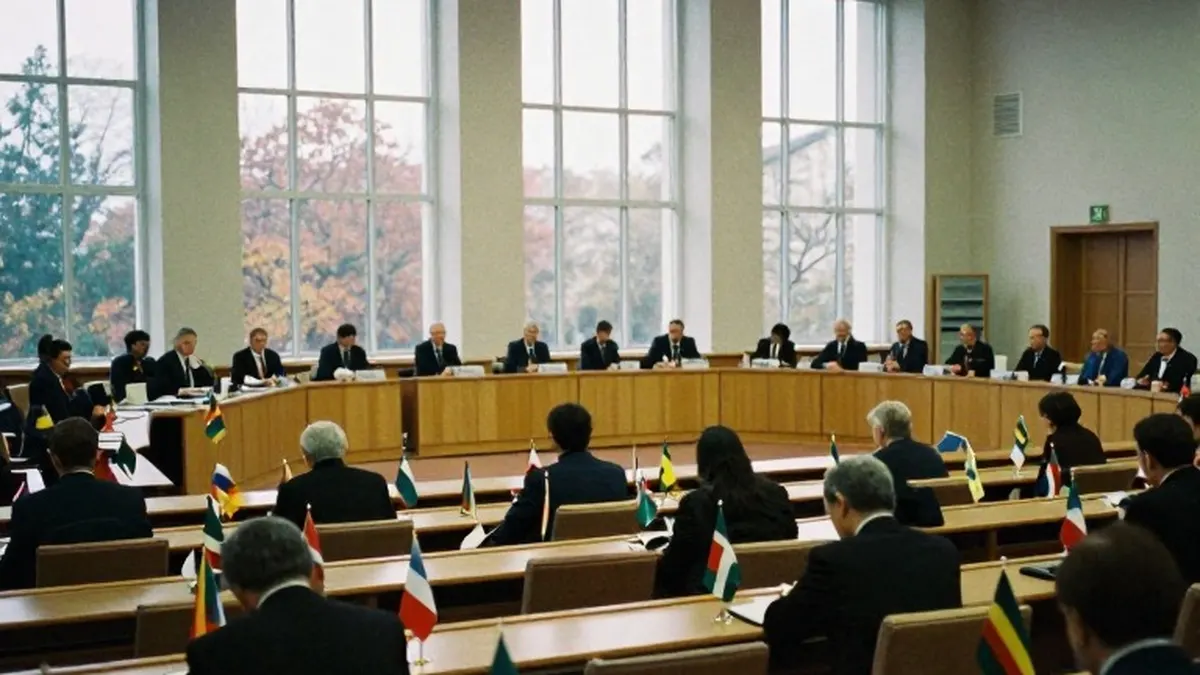
Russia is hosting its third Russia-Africa summit in Moscow on October 28 and 29, part of a push to build support outside the West since its full-scale invasion of Ukraine. Foreign Minister Sergei Lavrov has visited the continent with growing frequency, and foreign ministry spokesperson Maria Zakharova has called the effort a "historic return."
The summit, held at roughly three-year intervals since 2019, focuses on economic cooperation, with additional sessions on politics, security, science and culture. Yet Russia is actively engaged with only a handful of African states, mostly in the north of the continent, and trade figures reflect that.
Egypt is the clearest example. According to Russia's Federal Customs Service, bilateral trade reached $10.5 billion in 2025, more than double the 2021 level. Russian grain is the main driver, followed by metal products, while Egypt mainly sells fruit and vegetables. Russia is also building a large nuclear power plant at El-Dabaa on the Mediterranean coast, funded by a $25 billion Russian loan covering about 85% of costs.
Nikita Smagin, an expert on Russian policy in the Middle East, said Egypt could eventually serve as Moscow's gateway to Africa and other markets. He cautioned, however, that "Cairo is pursuing its own interests" and that it would be too optimistic to expect support based purely on political solidarity. Ivan Klyszcz of the International Centre for Defence and Security in Tallinn noted that Algeria is also a key partner, while efforts to deepen ties with Tanzania and Ethiopia have had no appreciable success so far.
Overall, Russian customs data put total trade with all 54 African countries at about $27 billion in 2025, with Egypt accounting for around 39%. Africa made up just 3.9% of Russia's foreign trade. Russia is not a major partner for Africa either: the European Union traded about $385 billion with the continent, China more than $348 billion, the United States almost $105 billion and India $103 billion. Analyst Fidel Owusu said middle powers such as Turkey and the UAE are doing far better than Russia. Beverly Ochieng of Control Risks expects Russia to compete harder for critical minerals and energy projects, citing lithium in Mali and nuclear initiatives.
Moscow's presence is more visible in security. Russian mercenaries, first the Wagner Group and now largely the defense ministry-controlled Africa Corps, have backed governments in unstable Sahel states, with affiliated companies gaining access to raw materials. The Congressional Research Service says the largest contingents, each several thousand strong, are in the Central African Republic, Mali and Libya, and Russian fighters have also been seen in Equatorial Guinea. Irina Filatova of the University of Cape Town points to mineral deposits, influence over Europe's southern borders, and Libya's role as a logistics hub for landlocked states.
Russia remains a leading arms supplier despite falling exports during the war. The Stockholm International Peace Research Institute estimates its share of the African market for 2021 to 2025 at 15%, third behind the United States at 19% and China at 17%. For 2020 to 2024 it ranked first with 21%.
Diplomacy appears to be a central goal. Owusu said Africa's large number of countries matters for votes in the UN General Assembly, where Russia has recently done better than before. President Vladimir Putin has told the Valdai Discussion Club that Russia's aim is "to develop together," unlike colonial powers. Filatova observed that perceptions vary widely: the Russian narrative is received very positively in South Africa, while anti-colonial sentiment elsewhere is not necessarily linked to Russia.
Source: Deutsche Welle