Conservation Group Nears $24.7m Goal to Buy Wooroora Station in Far North Queensland
Bush Heritage has raised more than $19m in private donations toward buying a 20,000-hectare cattle station that would close a gap in a wildlife corridor running up to Cape York.
By Riya Conti ·
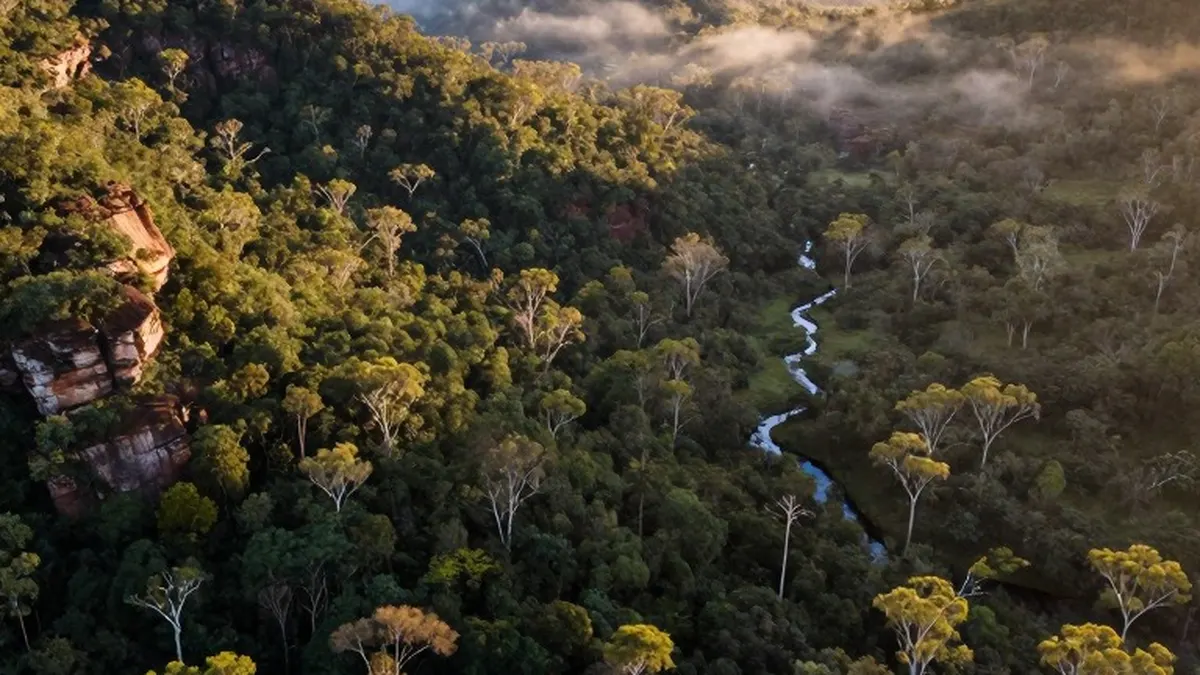
A conservation group says a large stretch of land in far north Queensland that connects the wet tropics with world heritage rainforest could be bought and protected by Christmas, after it secured more than $19m in private donations to purchase the cattle station.
Wooroora covers more than 20,000 hectares of largely intact wet sclerophyll forest and savanna woodland, on the lands of the Jirrbal people about 100km south-west of Cairns. It borders the existing 43,575-hectare Yourka Reserve, owned by Bush Heritage, in one of the most biodiverse regions in Australia.
At least 12 threatened species and more than 30 species of conservation significance have already been recorded on the property. They include the cassowary and tree-kangaroos, and Wooroora is also the northernmost refuge for koalas. The prospective owners believe it almost certainly shelters species not yet known to science. In 2024, a proposal to clear more than 500ha of the station for a 42-turbine windfarm was rejected by the then environment minister, Tanya Plibersek, who cited unacceptable environmental impacts, including on the spectacled flying-fox and the northern greater glider.
Bush Heritage chief executive Rachel Lowry said the purchase would be the organisation's most ambitious single acquisition in its 35-year history. "This breaks the glass ceiling," she said, adding that she believed this applied to the wider conservation sector as well.
Fundraising for the $24.7m needed to buy the land and manage it for an initial five years has run for more than 18 months. A presentation Lowry gave in New York during the 2025 UN climate summit helped lead to a donation of almost $2.5m from the foundation associated with the US outdoor clothing company Patagonia. An anonymous Australian philanthropist gave a further $6m. Bush Heritage is now asking the public to help raise the final $5.3m by 24 December.
Jirrbal senior elder Uncle Kurt Noble said the purchase would allow traditional owners to return to "proper Jirrbal land". His great-grandmother was born on the station, but he has not previously had the chance to visit. He said access to much of the country under private ownership had been very restricted over generations. Renewed access, he said, would support care for the environment and "the cultural values of our land", and let young people learn about country, language, song and significant sites.
Liam Roberts, a traditional custodian and chair of the Wabubadda Aboriginal Corporation, said the Jirrbal hope to jointly manage the reserve. "We've got rangers. We've got work we'd like to do on country," he said. He added that the station holds sacred artefacts along old Jirrbal trails and creeks.
Jo Axford, Bush Heritage's head of Queensland and the Northern Territory, said the property includes one of the region's largest unprotected stretches of wet sclerophyll forest, where towering eucalyptus grandis marks a transition between ancient rainforest and seasonally dry savannah woodland. The group has sought to acquire the station since 2010, she said, because it is the "missing piece" in a 429,000-hectare nature corridor extending up to Cape York.
Wooroora rises to about 1,000m above sea level but drops to 660m within 10km, a landscape Axford said creates a mosaic of habitats where threatened species such as the critically endangered magnificent brood frog may find refuge and adapt to a changing climate. It is one of the few places on Earth home to both the southern cassowary and the emu. Axford said invertebrates have not been surveyed and many gullies, valleys and rhyolite outcrops remain unexplored, so she is confident undescribed species live there.
Source: The Guardian