Who Are the Palestinian Citizens of Israel, and What Could Their Vote Mean?
Descended from Palestinians who stayed after 1948, the roughly two million Palestinian citizens of Israel face entrenched discrimination and rising violence while seeking greater political leverage.
By Ayanda Novak ·
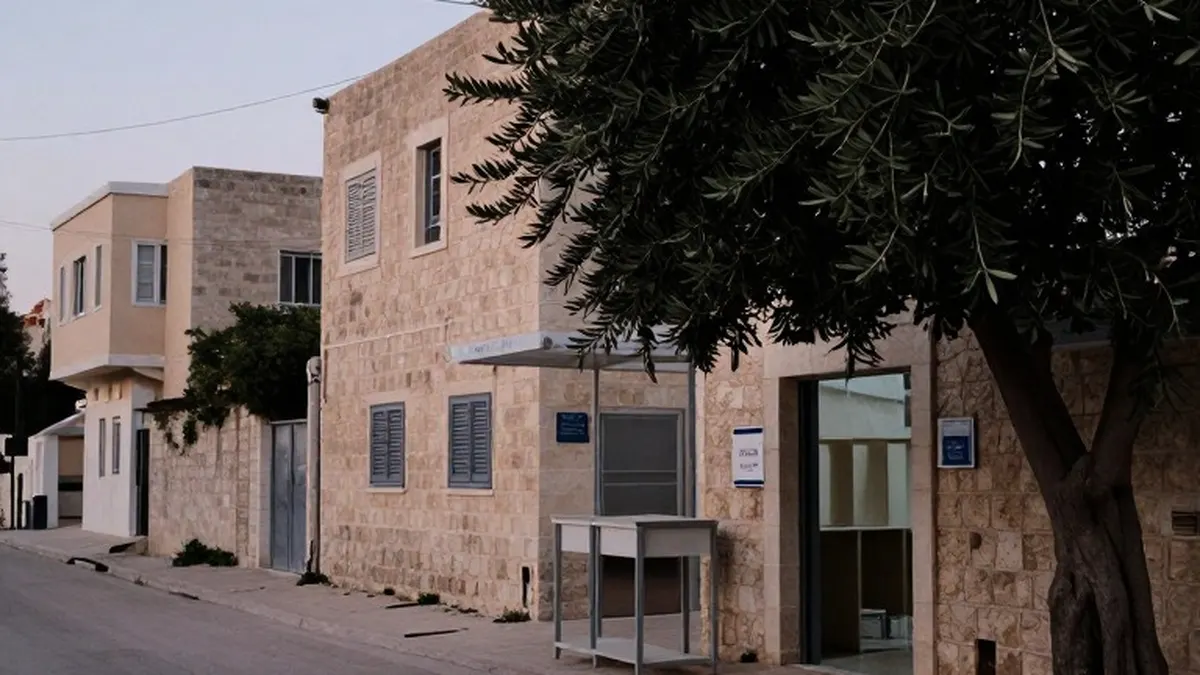
Palestinian citizens of Israel number around two million, about a fifth of the country's population of roughly 10 million. They are the descendants of Palestinians who remained inside the de facto borders of Israel after its creation in 1948, during the Nakba, the mass expulsion and destruction that Palestinians call the catastrophe.
About 150,000 Palestinians stayed in the territory Israel captured, which amounted to 78 percent of historic Palestine. Some were in areas Israeli forces had not yet reached, while others resisted expulsion. Nearly a quarter were internally displaced and barred from returning to homes, many of which were in villages that had been destroyed. Today they live mainly in the Galilee, the Triangle region and the Naqab desert. About 80 percent are Muslim, 10 percent Christian and 10 percent Druze. Israeli authorities often call them "Israeli Arabs," while many prefer "Palestinian citizens of Israel" or "Palestinians of 1948."
From 1948 to 1966 they were governed under a military regime that applied only to them, with movement restrictions, curfews and limits on political activity. In the Kafr Qasim massacre on 29 October 1956, soldiers shot villagers returning from work after a curfew was abruptly brought forward, killing 49 people, including women and children. On 30 March 1976, police killed six Palestinian citizens protesting land confiscations in the Galilee, an event now marked yearly as Land Day. During the Second Intifada, police killed 13 Palestinian demonstrators and arrested hundreds more.
Legal discrimination has also been a constant. Adalah, a Haifa-based legal centre, counts more than 65 Israeli laws passed since 1948 that explicitly or implicitly discriminate against Palestinians. They touch on land, housing, public funding and family reunification. Examples include the 1950 Absentees' Property Law, a 2003 restriction on family reunification with spouses from the occupied territories, and a 2011 law on admissions committees that critics say allows rejection of applicants who do not fit a community's "Zionist-Jewish character." The 2018 Nation-State Law reserves national self-determination for Jewish people and gives Arabic only a "special status."
Violent crime is another severe problem. The Abraham Initiatives, an Israeli civil society group, links it to under-policing and tense relations with police. In 2023 it said half of the country's violent crime affects Palestinians. Killings rose from 116 in 2022 to 244 in 2023 and reached a record 252 in 2025. Police solved fewer than 15 percent of killings in Palestinian communities, compared with about 65 percent where victims were Jewish. Community representatives accuse police of ignoring the illegal arms trade, while the government denies responsibility.
Politically, Palestinian citizens began organising in the 1950s, and stronger parties emerged by the 1970s. Hadash was founded in 1977, followed by Balad, Ta'al and Ra'am. The High Follow-Up Committee for Arab Citizens of Israel, formed in 1982, became an umbrella body linking local authorities and national movements.
In 2015, Hadash, Balad, Ta'al and Ra'am formed the Joint List after the electoral threshold was raised from 2 percent to 3.25 percent. It won 15 seats in March 2020, becoming the Knesset's third-largest bloc, before internal disputes split it. In 2021, Ra'am broke a long-standing taboo by joining the coalition led by Naftali Bennett and Yair Lapid. Its four seats helped end Benjamin Netanyahu's 12-year run as prime minister.
Ahead of the 2026 election, Hadash, Balad and Ta'al reunited under the Joint List, while Ra'am stayed separate. Together the two alliances are projected to win between 18 and 20 seats, which could give Palestinian-led parties fresh leverage in coalition talks. Whether that representation can be turned into meaningful change for Palestinian citizens remains the open question.
Source: Middle East Eye