Iraqi Prime Minister Visits Syria as Both Sides Eye Trade Routes and Border Security
Ali al-Zaidi's arrival in Syria on October 28 is the first such trip by an Iraqi prime minister since the fall of the Assad regime in 2024, with security and economic ties expected to top the agenda.
By Ayanda Novak ·
Iraqi Prime Minister Ali al-Zaidi left Baghdad on October 28 for Syria, landing shortly before noon on Wednesday. The trip is the first of its kind since the Assad regime fell in 2024, and it could prove a significant turning point for two neighbors with deep historical links.
Iraqi state media said al-Zaidi is leading a high-level delegation, though Baghdad has released few details about the visit. Security and counter-terrorism cooperation were expected to feature in the talks.
The day before, Syrian President Ahmed al-Sharaa told Iraq's Dijlah TV that the border between the two countries is "completely" secure, according to the Syrian state news agency SANA. Recent friction between Syria and Jordan suggests problems may remain, however. Syria says a Jordanian airstrike on ISIS in Syria killed several civilians.
In the interview, al-Sharaa described a historic opportunity for Syria and Iraq to deepen economic cooperation, strengthen state institutions and coordinate on regional security. He highlighted Syria's role as a trade corridor for Iraq, pointing to links between Iraq's Faw Port and Syria's Mediterranean port of Tartous. He also called for rebuilding oil pipelines that connect Iraq to Syria's Baniyas port. Iraqi oil has been flowing into Syria because of the crisis with Iran.
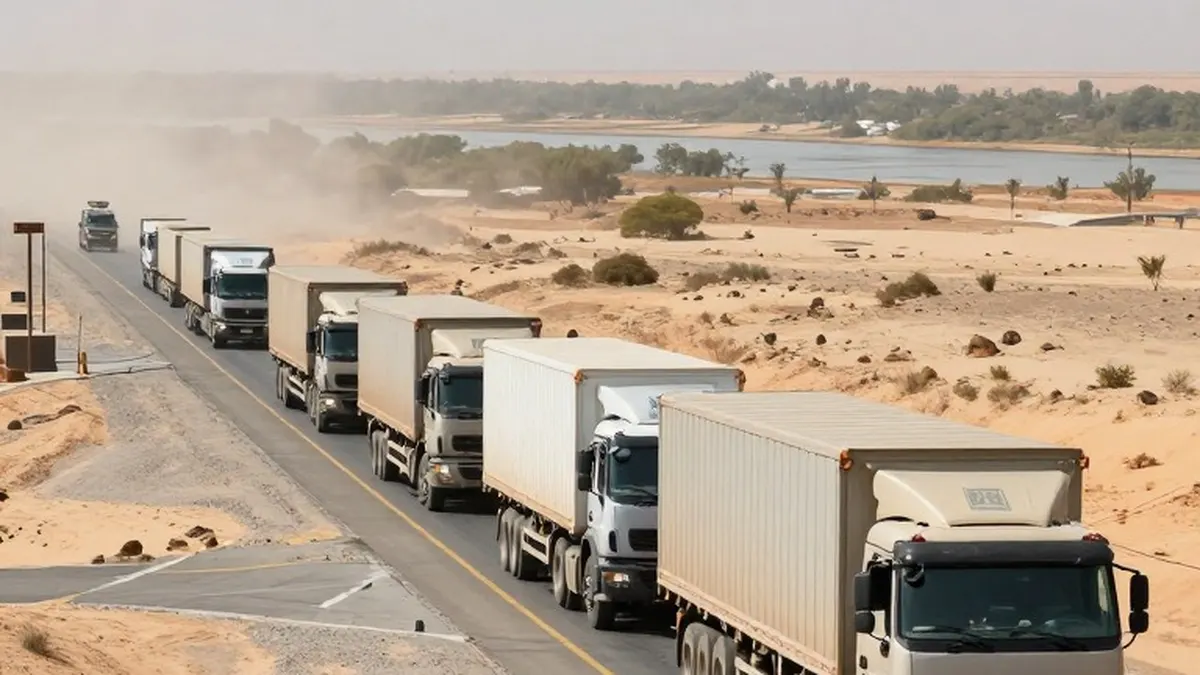
According to SANA, commercial traffic between the two countries has risen sharply over the past six or seven months, including more than 100,000 transit trucks and 40,000 import and export trucks. Al-Sharaa also voiced support for al-Zaidi's efforts to fight corruption and bring armed groups under state authority, saying the "decision of war and peace must remain in the hands of the state."
The Syrian leader also spoke about his own past in Iraq. SANA said he went there in 2003 out of solidarity and duty to defend Iraqis and confront the American occupation, without organizational, political, military or security affiliations. He said he was imprisoned around 2005, took no part in the sectarian conflicts, and returned to Syria in 2011 after his release. Iraq views the groups al-Sharaa worked with as terrorist organizations, which makes the topic controversial.
The border region has long carried strategic weight. After the 2003 US invasion, insurgents crossed from Syria into Iraq through the Middle Euphrates River Valley, particularly around al-Bukamal and al-Qaim. ISIS later used the same routes while expanding across eastern Syria and western Iraq in 2013 and 2014. The flow later reversed when Iraqi Shi'ite militias entered Syria to back the Assad regime, and the al-Qaim and al-Bukamal crossing became part of Iran's supply network, including weapons moved to Hezbollah.
The shared history reaches back to the Ottoman Empire, the rise of Arab nationalism and rival branches of the Ba'ath Party, which took power in Damascus in 1963 and Baghdad in 1968. Today, reports of oil moving by truck through the Syrian desert near al-Tanf show the corridors still matter. Part of Iraq is heavily Shi'ite and looks to Iran, while parts of Syria have historically looked toward the Mediterranean.
The outcome matters beyond the two countries. Iraq hosts Iranian-backed militias that threaten Israel, and they were also active in Syria before Assad's fall. A more secure Syria and Iraq, where such groups cannot move freely, would benefit Israel, Saudi Arabia and Jordan.
Source: The Jerusalem Post